DISSECTION HALL:
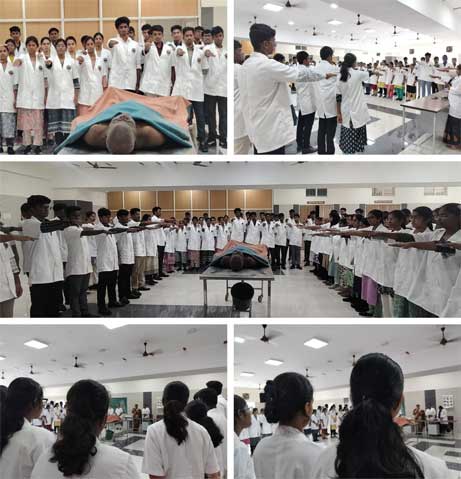
The department boasts of an impressive dissection hall .The
Department has a large well-illuminated & cross-ventilated
spacious dissection hall to accommodate 150 students. It has an
attached cold storage room and embalming room. Ample cadavers
are available for the students to dissect and have a real time
experience. Other learning aids like dissected specimens,
skeletons and bone sets are available in the lab. Instruments
like drilling machine, meat cutting machine, embalming machines
are available in the lab. It is neatly setup, clean and has a
very hygienic dissection environment. The department takes great
care in meticulously embalming and storing the cadavers. The
cadavers are stored in tanks containing preservative fluids. An
articulated skeleton is always present during dissection
classes.
HISTOLOGY LAB:
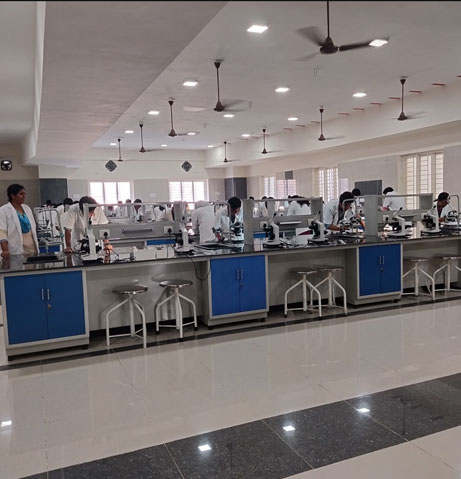
Histology or microscopic anatomy is taught through lectures and
practicals . The
department has a well equipped histology lab with good quality
microscopes. The lab
has a seating capacity of 80 students. Separate cupboards are
available for storing
each microscope. Slides of various tissues and organs are
available for study.
ANATOMY MUSEUM:
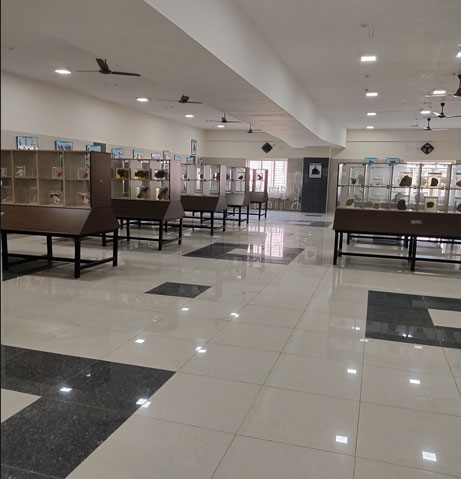
The department takes immense pride and pleasure in possessing an
extremely impressive
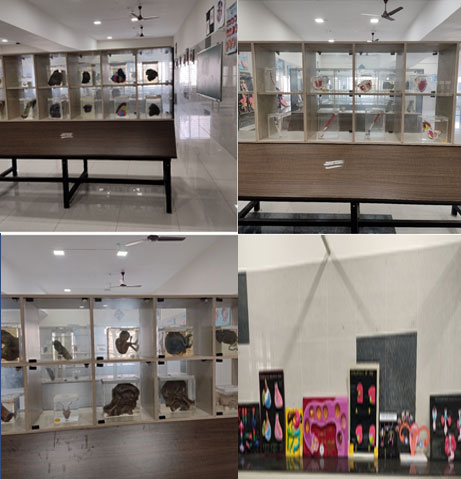
museum. The museum contains articulated human skeletons,
anatomical specimens and
models and above all a fine collection of embryological
specimens with birth
defects. Different types of mounted wet specimens, dry
specimens, Plaster of Paris,
fiber 3D models, charts and radiological images are also
available in the museum.
Seating arrangements are made for 60 students. It is impressive
that majority of
models and specimens displayed in the museum are made by the
staff and undergraduate
students. MBBS students are permitted to avail the facilities of
the museum during
working hours. On request, facilities in the Anatomy Museum are
made available for
academic visits of students from schools and colleges around.
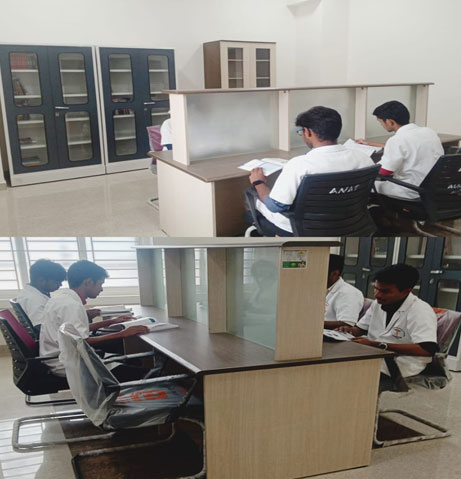
LIBRARY:
There are 100+books with the latest edition on the subject along
with National and
International Journals.
Embalming is the process of chemically treating
the dead human body to reduce the presence
and growth of the microorganisms, to retard
organic decomposition and to restore acceptable
EMBALMING
- Embalming is the process of chemically treating the dead
human body to reduce
the presence and growth of the microorganisms, to retard
organic decomposition.
- Here we preserve the dead bodies for the purpose of
dissection.
- Many types are available in embalming. We commonly follow
arterial embalming.
- Arterial embalming involves the injection of embalming
chemicals into the blood
vessels usually via the right femoral artery. The embalming
solution is injected
using an embalming machine and the embalmer massages the
cadaver to ensure a
proper distribution of the embalming fluid. In case of poor
circulation ,
multiple injection points ( subcutaneous embalming ) is also
performed.
- Embalming is done for anatomical research and study
purposes. The cadavers are
always very well fixed so that they can be used for not only
anatomical
dissection but also research purposes.
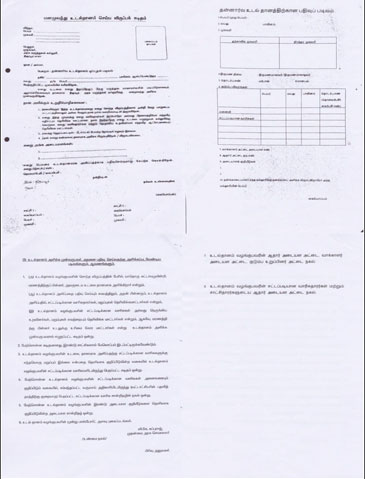
VOLUNTARY BODY DONATION
- Registration of the wish to be a body donor after death is
possible at the
anatomy department.
- Voluntary body donation is the act of giving one body after
demise for academic
and research purposes.
- Any adult can become a whole body donor. There is no upper
age limit. Here we
receive voluntary body donation as well as unclaimed bodies
from the police
personnel.
- There is a constant need for whole bodies for teaching the
healthcare
professionals.
- Voluntary body donation forms the back bone of cadaveric
teaching and learning.
- Body donation provides the students and medical researchers
with un-paralleled
opportunities to study the human body. Computers or books
cannot totally replace
body dissection in learning the anatomy.
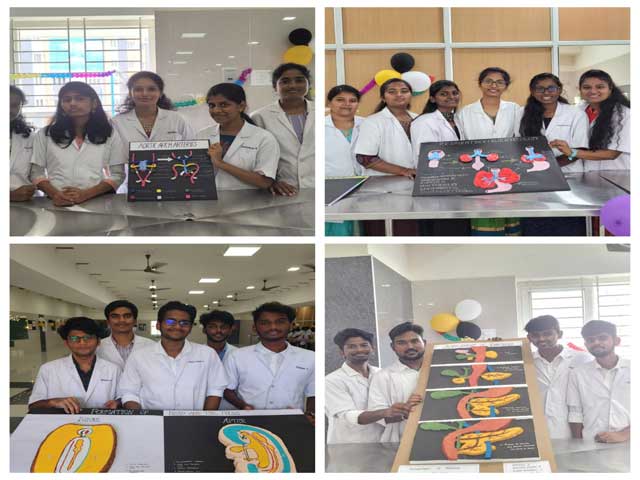
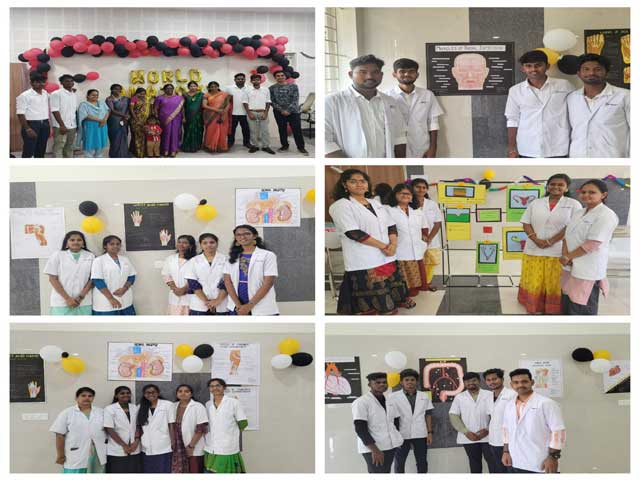
WORLD ANATOMY DAY :
The world anatomy day was celebrated as ANAT ARTISANZZ 2022 on
October
15th, 2022.
Budding doctors expressed their Embryological and Anatomical
talents in
magnificent manner.
MODEL MAKING COMPETITION
CHART MAKING COMPETITION
Anatomy is the foundation in integrating basic and
clinical scientific knowledge. It emphasizes in
introducing a greater clinical focus in basic science.
This teaching may help to bridge the gap between basic
science and clinical practice. Hence ANATOMY plays a
pivot role for the upliftment of the career of the
future budding doctors.